

Ask most tea buyers to name Japan's great matcha regions and you will hear Uji, perhaps Kagoshima, possibly Nishio. Almost no one says Yamato. And yet Yamato — the ancient name for Nara, Japan's first permanent capital — is where the story of Japanese tea begins.
This is not a niche claim. It is a historical fact that the global tea industry has simply failed to market.
Yamato: What the Name Means
Yamato (大和) is the ancient name for Nara and its surrounding province — Japan's first permanent capital, established in 710 CE. The name predates the country's modern administrative divisions and carries a cultural weight that "Nara Prefecture" does not fully convey. Yamato is the Japan before Japan had a unified name for itself.
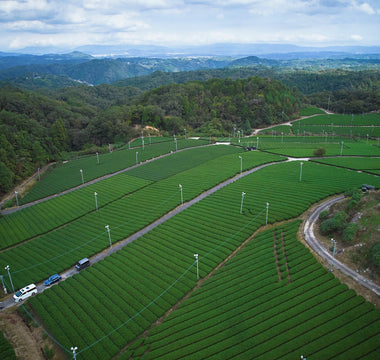
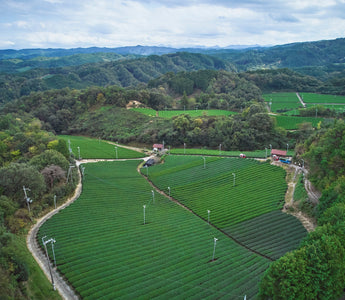
The tea produced in this region is called Yamato-cha (大和茶) — Yamato tea. It is grown in the highland areas of the Yamato region, primarily in mountain villages where altitude, clean water, and dramatic seasonal temperature shifts create growing conditions that are distinct from the valley plains of Uji or the flatlands of Kagoshima.
The Historical Record — 815 CE
The Nihon Koki (日本後紀), compiled in 840 CE and recording events through 833 CE, contains the earliest known written account of tea drinking in Japan. The entry for the 6th month of 815 CE describes the Buddhist monk Eichu (永忠) offering tea to Emperor Saga during an imperial tour of the Kinai region.
Eichu had spent years studying at Tang Dynasty temples in China. He returned to Japan and took up residence at temples in the Nara region. His presentation of tea to the emperor was significant enough to prompt the emperor to order tea cultivation across five provinces of central Japan — an event historians regard as the formal beginning of Japanese tea culture.
This was not Uji. This was Yamato.
Murata Juko and the Birth of Wabi-Cha
Six centuries after Eichu, another figure from Nara would define Japanese tea culture in a more lasting way. Murata Juko (村田珠光, 1423–1502) was born in Nara and is credited as the originator of wabi-cha — the aesthetic philosophy that transformed tea from a courtly entertainment into a spiritual practice.
Wabi-cha emphasizes restraint, imperfection, and the quiet dignity of simple materials. It is the philosophical foundation of the tea ceremony (chado) as the world knows it — the reason a tea bowl with an irregular glaze is more valued than a perfectly symmetrical one, the reason silence and small gestures carry meaning in the tea room.
Sen no Rikyu, who codified the tea ceremony into its mature form in the 16th century, was building explicitly on Juko's Yamato-born philosophy. The spirit of Japanese tea culture has Nara at its root.
Why Yamato Tea Disappeared from Export Markets
Yamato-cha never disappeared as a tea. It continued to be produced and consumed — it simply never developed the export infrastructure that Uji built in the Meiji era. Several factors contributed:
- Geography: The Yamato highland is mountainous and relatively isolated. Large-scale mechanized production and transport infrastructure developed later than in Uji's valley.
- Scale: Production volumes are smaller than Uji or Kagoshima. The region was never positioned for mass export.
- Marketing history: The Uji brand was built by tea merchants with direct connections to Kyoto's imperial court and aristocratic culture. Nara's tea culture was older but its commercial infrastructure was thinner.
The result was that Yamato-cha became one of Japan's best-kept tea secrets: exceptional quality, profound historical significance, and almost no presence in global trade.
What Yamato Matcha Tastes Like
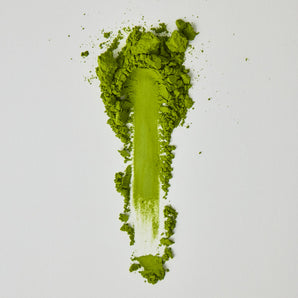
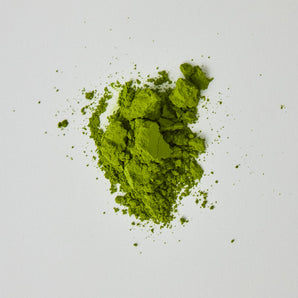
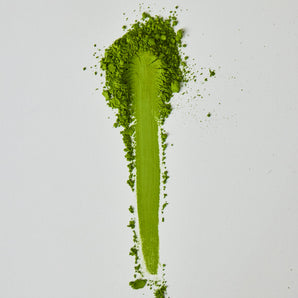
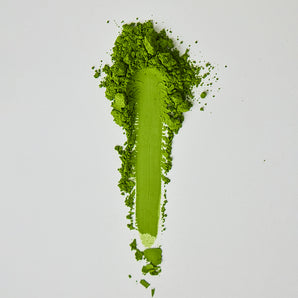
The terroir of the Yamato highland produces a matcha with a flavor profile distinct from Uji. Higher elevation and more pronounced temperature swings between day and night build deeper theanine concentrations — translating into a more complex umami character with a longer finish. The color is a deep, saturated emerald green, reflecting the chlorophyll density of highland shade-grown leaves.
Where Uji matcha is often described as refined and elegant, Yamato matcha tends toward depth and complexity — more layered, with an aroma that evolves in the cup. For a cafe building a signature drink, it offers something genuinely differentiated from the increasingly homogenized "ceremonial grade Uji" positioning that has saturated the market.
waka matcha and the Yamato Tradition
waka matcha grows and stone-mills matcha at our own farm in the Yamato highland, Nara. Our farm sits at approximately 400 meters above sea level, within the same highland zone that has produced tea since the earliest records of Japanese tea culture. We shade our tea for a minimum of 25 days before harvest, hand-pick first-flush new shoots, and stone-mill in a temperature-controlled room to preserve the aromatic compounds that make each harvest distinctive.
We offer five grades of Yamato matcha for wholesale buyers — from ceremonial-grade for tea ceremony and premium lattes, to culinary grades for food manufacturing. All orders come with full origin documentation, processing records, and pesticide residue testing.
Free samples for wholesale buyers and importers in the USA. Mention "Yamato Matcha" for a faster response.
info@wakajapan.store
Request a Sample