

抹茶ができるまで

Leaf Sorting
Harvesting
The tea fields are covered with shade cloth 20+ days before harvest. When the tender new leaves are firm, artisans carefully pluck each shoot by hand — a traditional technique called koki-tsumi, the hallmark of Japan's finest matcha craftsmanship.

Cooling & Humidification
Cooling & Humidification
If freshly harvested leaves are left untreated, fermentation begins immediately. Humid air is introduced to maintain moisture levels and suppress heat generated by respiration, preserving quality and freshness.

Steaming
Steaming
To halt oxidizing enzymes and preserve the vivid green color, the leaves are steamed in a continuous rotary drum steamer for approximately 20 seconds — shorter than standard sencha. Steaming time can be adjusted for a deeper color.

Mixing & Cooling
Mixing & Cooling
Immediately after steaming, air pressure blows the leaves into a cooling spreader (andon), dispersing them to prevent clumping and preserve color and aroma. Typical andon height: 5–7 meters.

Primary & Final Drying
Primary & Final Drying
Leaves are dried for ~30 minutes at 170–200°C in a 10-meter dryer. They pass through a 3–5 layer caterpillar conveyor system — rapid initial drying, then gradual, even drying — producing a pleasant roasted aroma and balanced flavor.

Stem Removal
Stem Removal
After drying, the leaf portions are nearly dry but stems retain moisture. A stem-cutting machine precisely separates the leaf portion from the stems and veins (the "bone").

Re-drying
Re-drying
Because stems and veins retain more moisture, they are dried again and further separated from the leaves using air pressure.

Blending & Packaging
Blending & Packaging
One full lot is evenly blended and packed into large paper shipping bags called daikai (10–20 kg each).
Goba: traditional name for the blending area. Daikai: double-layered paper bags with inner plastic lining, used to transport unfinished tea.

Stone-Milling
Stone-Milling
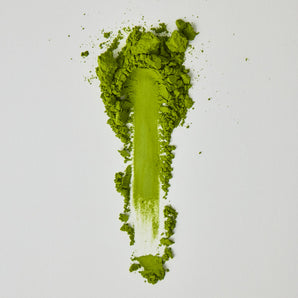
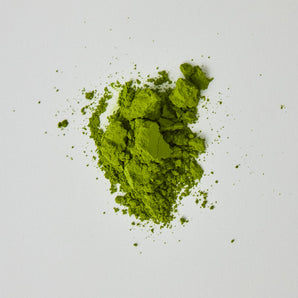
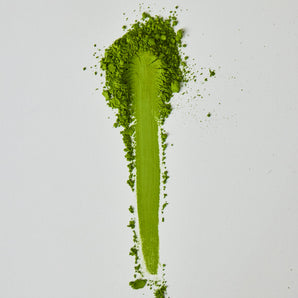
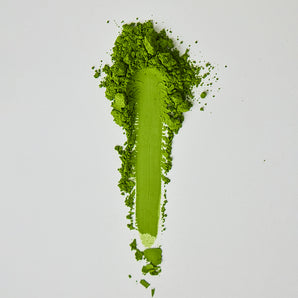
Tencha is stored in finished-tea form until just before shipment, then stone-milled in a temperature-controlled room (~20°C, humidity below 40%) to produce the final matcha powder.