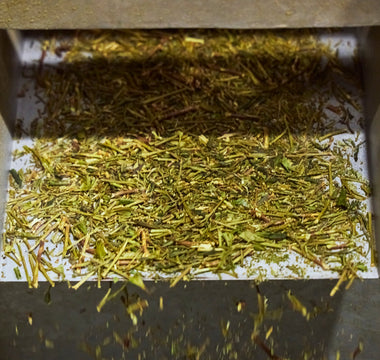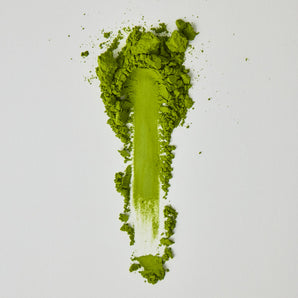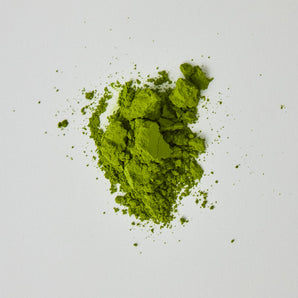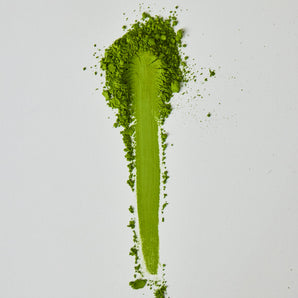


The global matcha shortage has produced an unexpected consequence for buyers willing to look beyond Uji: it has made Nara matcha — Japan's oldest and most historically significant tea origin — suddenly, strategically relevant.
This is not a trend argument. It is a supply argument backed by 1,200 years of history.
The Supply Shortage, Briefly
Uji-origin matcha is operating under strict allocation from major producers. Prices have risen 30–170% depending on grade and source. Lead times for spring 2026 delivery stretched to 8–10 weeks at multiple suppliers. Meanwhile, Kagoshima — the industrial workhorse origin representing 40–45% of Japan's total output — is absorbing displaced demand at the cost of differentiation.
The result: buyers who built their brand around "Uji matcha" are paying premium prices for an increasingly commoditized story. And buyers who pivoted to Kagoshima to manage cost are paying less but differentiating less.
There is a third option that almost no one in the export market is using.
Nara: Why It Was Overlooked, and Why That Is About to Change
Nara is historically the most important tea origin in Japan — and almost no one outside Japan knows this. The oversight is not about quality. It is about marketing history.
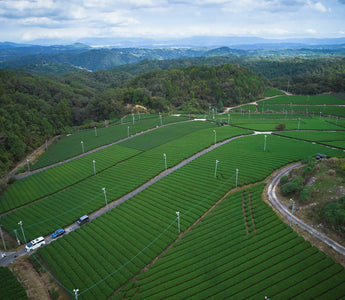
When Japan's modern tea industry consolidated in the Meiji era, Uji's proximity to Kyoto and its established merchant network gave it a dominant export position. Nara — mountainous, inland, with production concentrated in small highland farms rather than valley plains — never developed the same export infrastructure. Its tea was consumed domestically, within the region, with almost no presence in international trade.
That absence is now an advantage.
"Nara matcha" on a menu or package is an immediate conversation starter. No other cafe in your market is using it. That gap closes as more buyers discover what the shortage has made visible.
The Historical Case — Why Nara Comes First
The earliest written record of tea in Japanese history — the Nihon Koki, 815 CE — describes the monk Eichu presenting tea to Emperor Saga. Eichu studied at temples in Nara. The first cup of tea in Japan was brewed in Nara.
Murata Juko (1423–1502), credited as the founder of wabi-cha — the philosophical spirit of restraint and presence that defines the Japanese tea ceremony — was born in Nara. The aesthetic that makes Japanese tea culture distinct from Chinese or Korean tea culture originated in Nara's mountains and temples.
Uji's fame came later, built on geography, merchant networks, and proximity to Kyoto's aristocratic culture. Nara's claim is older and, in terms of cultural depth, arguably stronger.
The Quality Case — Why Nara Terroir Produces Exceptional Matcha
Nara's Yamato highland sits at approximately 400 meters above sea level — higher than Uji's valley position. The practical effect is a dramatically larger day-night temperature swing: 15–20°C daily range versus the more moderate lowland climate.
This thermal stress matters because it is one of the conditions that drives accumulation of L-theanine — the amino acid responsible for matcha's umami, sweetness, and the "calm focus" effect that differentiates it from coffee. High-altitude, high-temperature-swing environments consistently produce higher theanine concentrations than lowland growing conditions at equivalent shading durations.
The Supply Case — Why Nara Is Available When Uji Is Not
Because Nara matcha has not been drawn into the global demand surge in the same way as Uji, supply dynamics are fundamentally different:
- No allocation limits: waka matcha does not operate waitlists or per-buyer limits. Direct-farm relationships mean supply is contracted, not auctioned.
- No broker markup: The standard US supply chain for Uji matcha runs 4–5 intermediary steps. waka matcha ships direct — no Japanese exporter, no US importer, no distributor layer.
- Shorter lead times: Standard lead time for sample orders is 1–2 weeks. Wholesale volume contracts can be structured for quarterly delivery with predictable pricing.
- Full documentation: Origin, grade, shading duration, harvest date, processing method, pesticide residue testing — all available for every wholesale order.
For Menu and Brand Positioning
The story that Nara matcha enables on a menu or label is qualitatively different from anything a Uji or Kagoshima story can offer in 2026:
- "From Japan's oldest tea origin" — historically accurate, verifiable, extraordinary
- "Own-farm, direct-from-source" — traceable in a market where traceability is increasingly demanded
- "The origin of Japanese tea ceremony culture" — a cultural narrative that connects your product to something deeper than trend
None of this requires the shortage to persist. Even when Uji supply normalizes, the scarcity of Nara matcha as a menu item will remain — because almost no one outside Japan is using it.
Free samples for wholesale buyers in the USA. Tell us your application and volume — we will recommend the right grade and structure a supply arrangement that works for your business.
info@wakajapan.store
Request a Sample