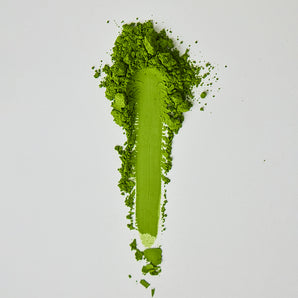


"Stone-milled" and "machine-milled" — you see these terms on matcha product pages all the time, but do you know what they actually mean? For cafe owners and wholesale buyers, understanding this difference can completely change how you source and position your matcha.
How matcha is made
Matcha starts with tencha — shade-grown tea leaves that are steamed, dried, and stripped of stems and veins. These tencha leaves are then ground into fine powder. The difference lies in how that grinding happens: stone-milling or machine-milling.
Stone-milled matcha
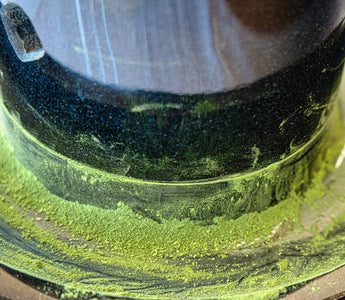
Stone-milling uses a traditional granite millstone rotating slowly to grind tea leaves into powder. Each stone mill produces only about 30–40g of matcha per hour — extremely time-consuming.
Characteristics
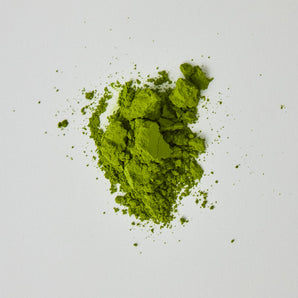
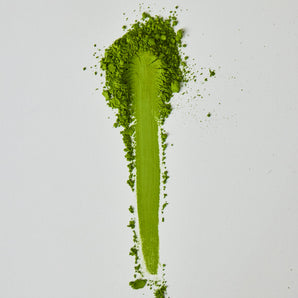
- Ultra-fine, uniform particles: 5–10 microns. Smoother texture and better suspension in liquid.
- Minimal heat generation: Slow rotation means almost no friction heat, preserving volatile aroma compounds and umami.
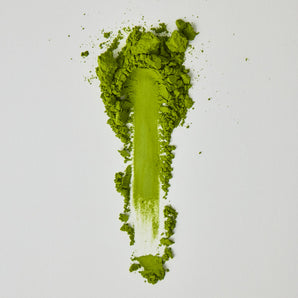
- Vibrant green color: Less oxidation keeps chlorophyll intact, producing a deep emerald green.
- Rich, mellow umami: L-theanine and other flavor compounds are preserved, resulting in a refined, complex taste.
Best for: tea ceremony, signature matcha lattes, high-end gifting.
Machine-milled matcha
Machine-milling uses ball mills or air-jet pulverizers to grind large volumes of tea quickly — tens to hundreds of times faster than stone-milling.
Characteristics
- High production efficiency: Suited for large-scale production at lower cost.
- Slightly coarser particles: Less uniform than stone-milled; can affect mouthfeel.
- More heat exposure: High-speed friction can volatilize some aroma compounds.
- Ideal for food manufacturing: In baked goods, ice cream, and cooked applications, flavor differences are minimal — and cost-efficiency is high.
Which should you choose?
| Use Case | Stone-Milled | Machine-Milled |
|---|---|---|
| Tea ceremony | ◎ | ✕ |
| Signature matcha latte | ◎ | △ |
| Standard matcha latte | ○ | ○ |
| Matcha sweets / confectionery | ○ | ◎ |
| Ice cream / drink mix | △ | ◎ |
| High-volume / cost-focused | △ | ◎ |
Price difference
Stone-milled matcha typically costs 2–5x more than machine-milled at equivalent quality. For signature drinks and gifting, this premium is an asset. For large-scale food production, machine-milled delivers excellent value.
waka matcha offers both
waka matcha produces both stone-milled and machine-milled Uji matcha from our own farm in Kyoto. We can help you select the right grade and type for your specific application and budget. Sample requests and wholesale inquiries welcome.
Contact: info@wakajapan.store