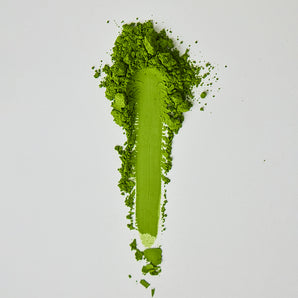


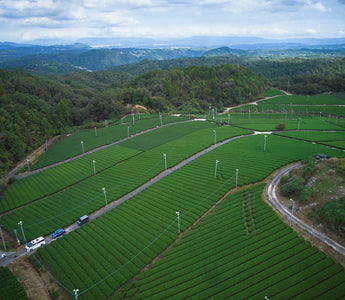
When most people think of premium Japanese matcha, they think of Uji. But there is another origin — older, historically more significant, and virtually unknown in the global market: Nara.
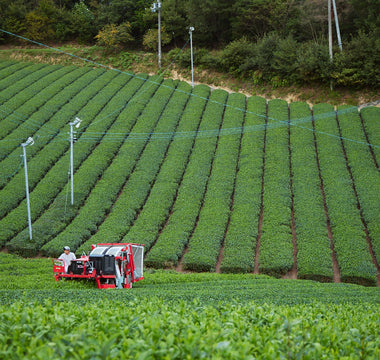
waka matcha grows and stone-mills our matcha at our own farm in Nara's Yamato highland. This is our story — and Japan's original tea story.
Nara: Where Japanese Tea Culture Was Born
Nara is Japan's first permanent capital (710–794 CE). Long before Uji or Kagoshima became known for matcha, it was Nara's monks who first brought tea seeds from Tang Dynasty China to Japan. Buddhist monks studying at China's great temples returned to Nara carrying not just scriptures but tea culture itself.
The earliest written record of tea drinking in Japanese history — the Nihon Koki (815 CE) — describes the monk Eichu presenting tea to Emperor Saga. Eichu had studied at temples in Nara. The first cup of tea in Japanese history was brewed in Nara.
Later, Murata Juko (1423–1502), widely credited as the founder of wabi-cha — the aesthetic philosophy at the heart of the Japanese tea ceremony — was born in Nara. The spirit of simplicity, restraint and presence that defines authentic tea culture was born in these mountains.
What Makes Nara Matcha Different?
Nara's Yamato highland sits at approximately 400 meters above sea level. The dramatic temperature swings between day and night — far greater than Uji's valley climate — stress the tea plants in a way that builds extraordinary flavor depth.
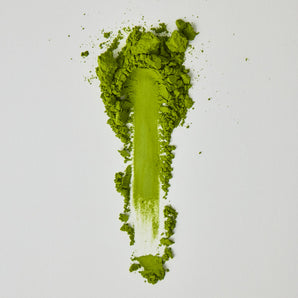
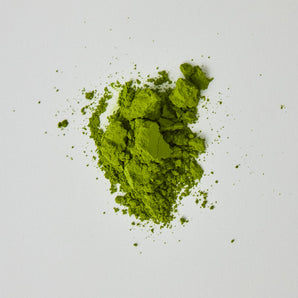
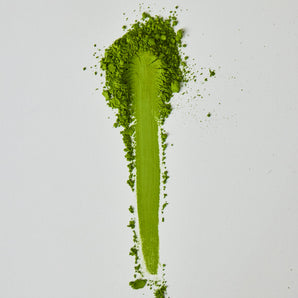
The result: tea leaves with higher theanine concentration, a deeper and more complex flavor profile, and a vivid emerald-green color from healthy, shade-grown chlorophyll.
How waka matcha Makes Nara Matcha — From Our Own Farm
- Shading (25+ days): Tea bushes are covered for a minimum of 25 days before harvest, blocking 80–90% of sunlight to boost theanine and suppress bitter catechins.
- Hand harvesting: First-flush shoots are hand-picked at the one-bud-two-leaf stage in spring.
- Steaming & drying: Leaves are immediately steamed to halt oxidation and preserve color, then carefully dried.
- Stem removal: Stems and veins are separated, leaving only pure tencha.
- Stone-milling: Tencha is stone-milled at low speed in a temperature-controlled room (~20°C). Each granite mill produces only 30g per hour — preserving aroma compounds that faster methods destroy.
Nara Matcha Grades — Wholesale Buyer's Guide
| Grade | Best Use | Flavor Profile |
|---|---|---|
| Grade A | Tea ceremony, premium gifting | Intense umami, deep green, minimal bitterness |
| Grade B | Signature cafe latte, tea ceremony | Rich umami, complex aroma |
| Grade C | Specialty latte, confectionery | Balanced umami and mild bitterness |
| Grade D | Cafe operations, high-volume | Clean matcha flavor, consistent |
| Grade E | Food manufacturing, ice cream | Strong color, cost-efficient |
Pricing available on request — contact us for a wholesale quote.
Why Nara Matcha for Wholesale Buyers in the USA
- Rare origin: Virtually unknown in export markets. "Nara matcha" on your menu is an immediate conversation starter.
- Full traceability: Origin, grade, harvest date, and processing method fully disclosed — the direct answer to the fake matcha problem.
- Direct from farm: No brokers, no middlemen. waka matcha grows, processes, and ships directly.
- 1,200+ years of history: No other matcha origin carries this story.
Free samples available for wholesale buyers and importers in the USA. Mention the grade you are interested in for a faster response.
info@wakajapan.store